Inventory valuation
The valuation method decides the cost at which stock is relieved when it is sold. Cost of goods sold and the inventory figure on the balance sheet both follow from it, which makes this an accounting policy rather than a display setting.
Open the page
In the left menu choose Inventory, then Inventory Valuation under stock management.
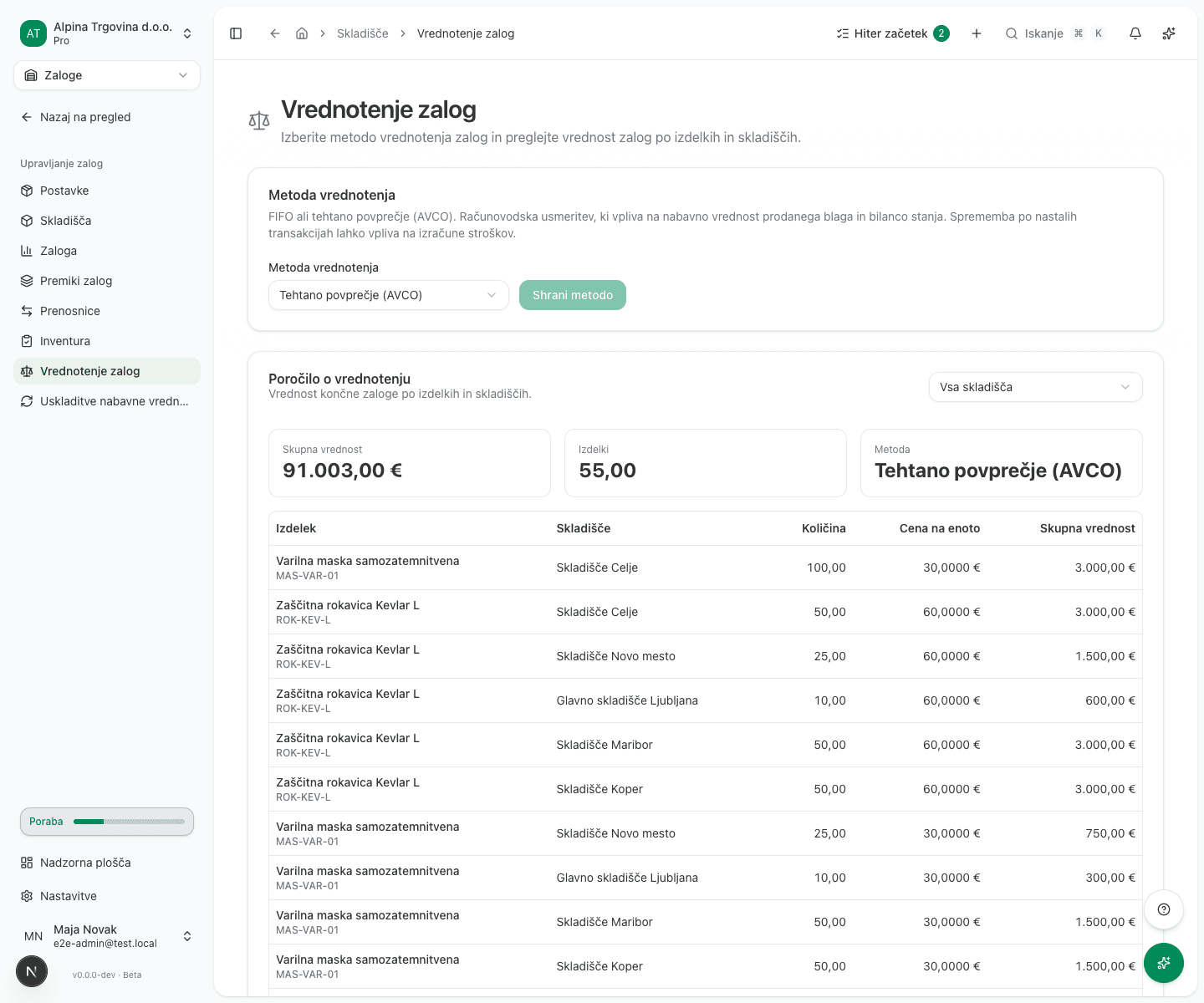
Choose the method
- Under Valuation method, choose one of the two:
- Weighted average (AVCO): each receipt recalculates the average unit cost. Every unit in the warehouse carries the same cost.
- FIFO: the oldest stock is consumed first, and each receipt stays its own layer with its own cost.
- Click Save method.
- Check that the Method field in the report below shows the method you picked.
Decide the method before your first receipts. Changing it once transactions exist may affect costs already calculated, and with them the comparability between periods.
The method picker on this page is offered to an administrator or an accountant. Other users see just the method in force here, with the note “Only an administrator or accountant can change the valuation method.” Ask an administrator or accountant of the organisation to set it.
Read the report
The Valuation report shows closing stock value by item and warehouse. Above it are the Total value, the item count and the Method in force; below, rows with Item, Warehouse, Quantity, Unit cost and Total value.
Read the report like this:
- Use the All warehouses dropdown to pick one warehouse, or leave all of them.
- Check the Total value. This is the figure that must tie to the inventory account.
- In the rows, compare Quantity and Unit cost for an individual item.
The same item appears on several rows when it is stocked in several warehouses. Each row is an item-and-warehouse combination.
Tying to the inventory account
This report’s total value is what must agree with the inventory account in the general ledger at year end. Where they disagree, the cause is usually a stock movement that was never posted, or a posting to the inventory account with no matching movement.
Common issues
The report is empty. No item carries a stock value, or you have selected a warehouse with no stock.
The unit cost is not what I expect. Under weighted average it is the average of all receipts, not the price of the last one. Under FIFO the cost differs per layer.